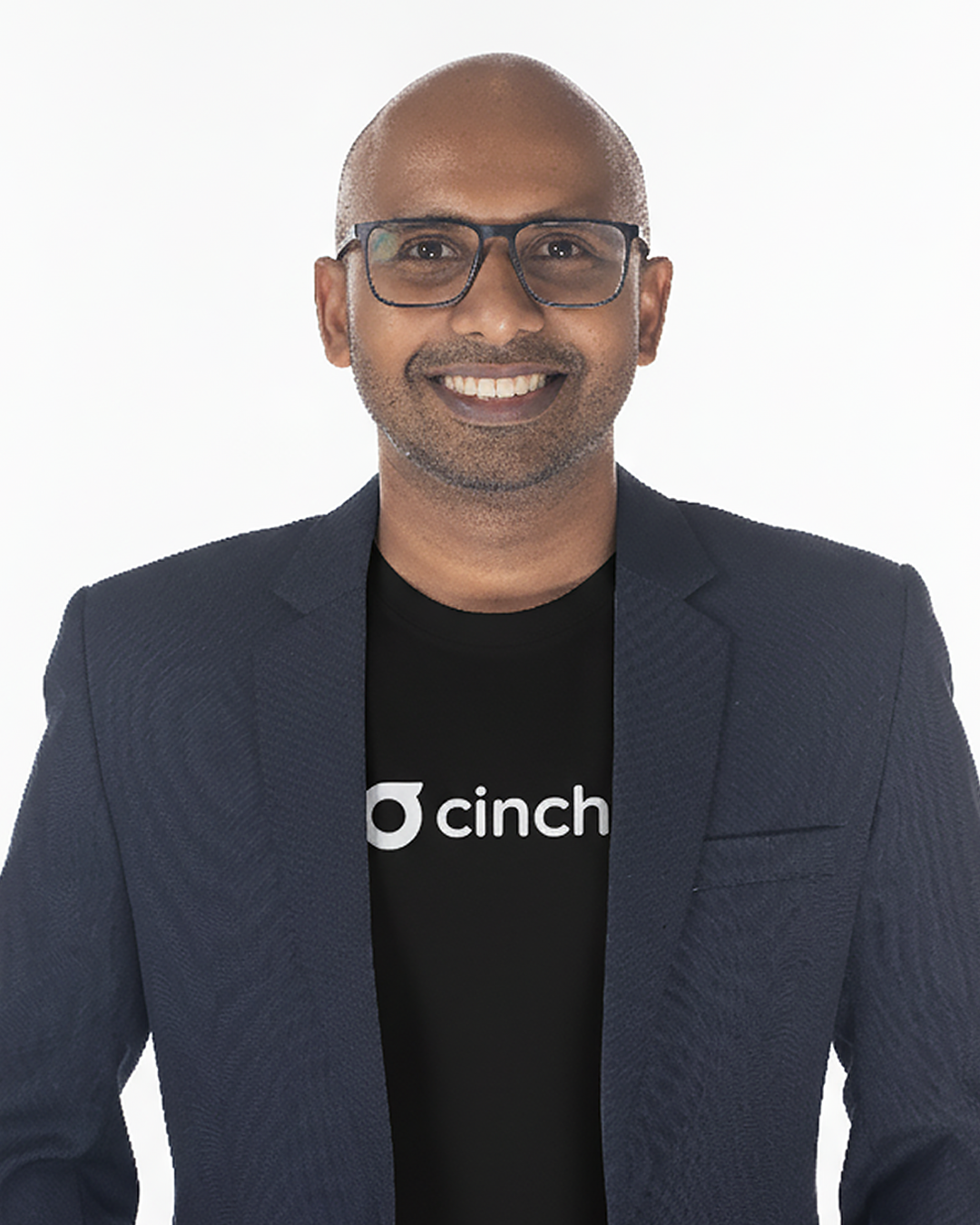
In technology, progress is often measured by speed. Faster launches, faster growth, faster returns. For Arvin Singh, COO at Cinch, that logic has never been enough. His focus is elsewhere, on access, sustainability, and the discipline required to build a long lasting company.
Singh’s career spans telecommunications, payments, and fintech, across both large organizations and early-stage companies. That combination shaped how he thinks about scale. Not as something to chase, but as something to earn.
Cinch, a device subscription company, was not a leap into the unknown. It was a return to a problem Singh had seen before. During his time building a buy now, pay later business, demand for electronics was consistently high, especially from consumers and businesses looking for affordability over a longer period. The model, however, was not built to support that.
“There was always unmet demand in devices,” Singh says. “Cinch was an opportunity to finally solve it properly.”
Sustainability as a starting point
From the beginning, Cinch was designed around the reality of rising device prices and shortening usage cycles. Consumers upgrade faster every year, often long before a device reaches the end of its useful life. The result is growing electronic waste and increasing financial pressure on customers.
Cinch’s subscription model aims to extend device lifecycles from roughly two and a half years to five, while ensuring devices are recycled responsibly once they are no longer usable. For Singh, what matters is that sustainability is built into the operating model, not added later for appearance.
“It’s measurable,” he says. “That’s how you know it’s real.”ing to chase, but as something to earn.
Cinch, a device subscription company, was not a leap into the unknown. It was a return to a problem Singh had seen before. During his time building a buy now, pay later business, demand for electronics was consistently high, especially from consumers and businesses looking for affordability over a longer period. The model, however, was not built to support that.
“There was always unmet demand in devices,” Singh says. “Cinch was an opportunity to finally solve it properly.”
Learning fast without disruption
When Singh joined Cinch, the company already had strong foundations. The founders had invested heavily in research and internal knowledge before launching. Rather than imposing change, Singh focused on listening, first internally, then externally.
He spent time with leaders across the business, but just as importantly, with customers and partners. Understanding real pain points across both B2C and B2B helped him move quickly without undoing what already worked.rs is that sustainability is built into the operating model, not added later for appearance.
“It’s measurable,” he says. “That’s how you know it’s real.”ing to chase, but as something to earn.
Cinch, a device subscription company, was not a leap into the unknown. It was a return to a problem Singh had seen before. During his time building a buy now, pay later business, demand for electronics was consistently high, especially from consumers and businesses looking for affordability over a longer period. The model, however, was not built to support that.
“There was always unmet demand in devices,” Singh says. “Cinch was an opportunity to finally solve it properly.”
Fundraising without the theatre
Few moments create more pressure inside a startup than fundraising. Singh’s approach is simple: transparency.
At Cinch, teams are involved early. They contribute to investor materials, see the same narratives investors see, and are kept informed about progress, including rejections. The company also runs scenario planning before rounds close, aligning hiring and budgets in advance.
The result is fewer surprises and less panic once funding is secured.
Fundraising without the theatre
Hiring, Singh believes, is often mistaken for progress. Every new role adds complexity, especially to communication. His rule is to feel the pain first. If a team is not clearly constrained, the role may not be needed yet.
That discipline now includes evaluating processes and automation before adding headcount. Growth, in this view, is something to manage carefully, not accelerate blindly.
Fundraising without the theatre
Cinch reinforces culture by pointing to behavior, not slogans. Individuals across the organization who deliver results while embodying the company’s values are highlighted and referenced regularly.
“It gives people something concrete to look at,” Singh says. “That’s how culture stays real.”
Sustainable growth over fast wins
Singh’s experience in large, complex organizations taught him the value of simplification. Whether managing a billion-dollar infrastructure project or a growing startup, the principle is the same. Focus on what truly moves the business forward.
Fast growth can be bought. Sustainable growth cannot. It comes from solid unit economics, repeatable motions, and patience.
For early-stage founders, Singh’s advice is blunt.
“Focus,” he says. “And say no more often than you say yes.”
At Cinch, that focus shows up in a business model built around access, affordability, and measurable impact. In an ecosystem that rewards speed, the company is betting on something quieter but more durable.
Progress that holds up over time.
Sustainable growth over fast wins
Arvin Singh is the COO of Cinch, Southeast Asia’s leading Device-as-a-Service platform, where he oversees operations and scaling to provide flexible device subscriptions. He previously co-founded and led hoolah, a successful BNPL platform that was acquired by ShopBack in 2021. Before that, he held senior positions at Visa and Worldpay, driving digital payment innovations across Asia Pacific. He also advises fintech startups and holds an MBA from INSEAD, bringing extensive experience in entrepreneurship, operations, and payments to his work.